வெள்ளி, 28 ஜனவரி, 2011

சில தீர்ப்புகள், திருத்தங்கள்..(8)


நன்றி: வினவு!

http://www.vinavu.com/2011/01/08/on-ayodhya-verdict/

அயோத்தி : இராமன் தொடுத்த வழக்கு! குரங்கு எழுதிய தீர்ப்பு!! – தோழர் மருதையன்

அயோத்தி தீர்ப்பு

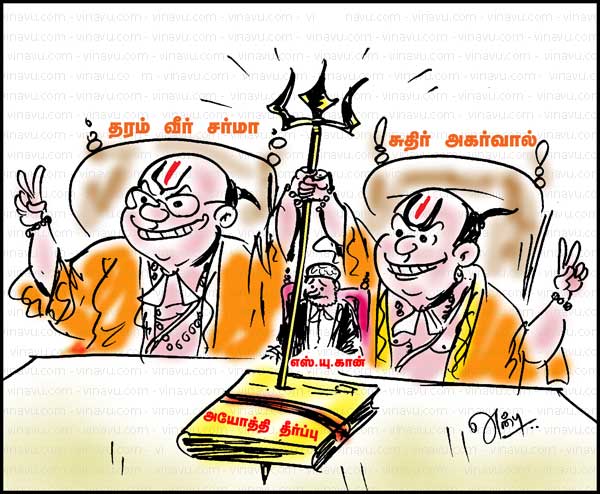
“பூட்டியிருந்த கோயிலின் கதவை பக்தர்களின் தரிசனத்துக்குத் திறந்து விடுவதற்கான உத்திரவை பிறப்பித்த அந்த நாளன்று, எனது நீதிமன்ற அறையின் மேற்கூரையில் கொடிமரத்தைப் பற்றியபடி ஒரு கருப்புக் குரங்கு அமர்ந்திருந்தது. அன்றைய தினம் தீர்ப்பு என்ன என்பதைத் தெரிந்து கொள்வதற்காக நீதிமன்ற வளாகத்தில் கூடியிருந்த பைசலாபாத், அயோத்தி நகரங்களைச் சேர்ந்த ஆயிரக்கணக்கான மக்கள் அந்தக் குரங்குக்கு வேர்க்கடலை, பழம் முதலானவற்றைக் கொடுத்தனர். அந்தக் குரங்கோ அவற்றைத் தொடக்கூட இல்லை. மாலை 4.40 க்கு நான் தீர்ப்பைப் படித்தவுடன் அந்தக் குரங்கு அங்கிருந்து அகன்றது. பின்னர் எனது பாதுகாப்புக்காக வந்திருந்த மாவட்ட ஆட்சியரும், போலீசு கண்காணிப்பாளரும் என்னை எனது பங்களாவுக்கு அழைத்துச் சென்றனர். பார்த்தால், எனது பங்களாவின் தாழ்வாரத்தில் அமர்ந்திருக்கிறது அந்தக் குரங்கு. எனக்கு அச்சரியம் தாங்கமுடியவில்லை. நிச்சயமாக ஒரு தெய்வீக சக்திதான் அந்தக் குரங்கு என்பதை உணர்ந்து கொண்டு அதனை வணங்கினேன்.”

பாபர் மசூதிக்குள் 1949இல் திருட்டுத்தனமாக வைக்கப்பட்ட ராமன் சிலையை, இந்து பக்தர்களின் வழிபாட்டுக்குத் திறந்து விடும் உத்திரவை 1986இல் பிறப்பித்த பைசலாபாத் மாவட்ட நீதிபதி கே.எம்.பாண்டே, பதவியிலிருந்து ஓய்வு பெற்றபின், 1991இல் வெளியிட்ட தனது சுய சரிதையில் குறிப்பிட்டுள்ள சம்பவம் இது.

செப், 30, 2010 அன்று அலகாபாத் உயர்நீதிமன்றத்தின் கூரையிலும் நிச்சயமாக அந்தக் கருங்குரங்கு இருந்திருக்க வேண்டும் என்பதை தீர்ப்பிலிருந்து நம்மால் புரிந்து கொள்ள முடிகிறது. எனினும் குரங்குகளின் எண்ணிக்கை ஒன்றா மூன்றா என்ற தெய்வீக உண்மை, பின்னாளில் இந்த நீதிபதிகள் சுயசரிதை எழுதும்போதுதான் நமக்குத் தெரியவரும்.

“ஒரு குறிப்பிட்ட இடம் யாருக்குச் சொந்தமானது” என்று தீர்மானிப்பதற்கான உரிமை மூல வழக்கில், பட்டா பத்திரம் போன்ற சான்றாதாரங்களைச் சார்ந்து நிற்காமல், அந்தக் குறிப்பிட்ட இடத்தில் இராமன் பிறந்ததாக இந்துக்கள் நம்புவதால், அவர்களுடைய நம்பிக்கையின் அடிப்படையில் அந்த இடத்தை இராமபிரானுக்குச் சொந்தமாக்குவதாகத் தீர்ப்பளித்திருக்கிறது அலகாபாத் உயர் நீதிமன்றம். ஒரு உரிமை மூல வழக்கில் மனுதாரரின் மத நம்பிக்கையின் அடிப்படையில் நீதிமன்றம் அவருக்கு சொத்துரிமை வழங்கமுடியுமா என்பதுதான் அலகாபாத் உயர்நீதிமன்றத் தீர்ப்புக்கு எதிராக எழுப்பப் படும் மையமான கேள்வி. மனுதாரரின் நம்பிக்கை கிடக்கட்டும். நீதிபதியின் நம்பிக்கைதான் 1986 தீர்ப்பையே தீர்மானித்திருக்கின்றது என்பதையல்லவோ குரங்கு கதை நமக்குக் காட்டுகிறது!
அயோத்தி - இராமன் தொடுத்த வழக்கு! குரங்கு எழுதிய தீர்ப்பு!! – தோழர் மருதையன் a'

அலகாபாத் தீர்ப்பு: இந்து பாசிச அரசியலுக்கு சட்டரீதியான அங்கீகாரம்!

அலகாபாத் தீர்ப்புக்கு முன் இந்துக்களின் நம்பிக்கையாக மட்டுமே இருந்த இராமஜென்மபூமி, இன்று சட்ட அங்கீகாரம் பெற்று விட்டதாகவும், இத்தீர்ப்பின் மூலம்  தேசிய ஒருமைப்பாட்டுக்குப் புதியதொரு அடித்தளம் அமைக்கப்பட்டிருப்பதாகவும் கூறியிருக்கிறார் அத்வானி. “இதுதான் இராமன் பிறந்த இடம் என்று நிரூபிக்கும் பட்சத்தில், அந்த இடத்தை விட்டுக் கொடுத்துவிடுவதாக வக்பு வாரியம் ஏற்கெனவே கூறியிருந்தது. இதோ இன்று நிரூபிக்கப்பட்டுவிட்டது. அவர்களுடைய மனுவும் தள்ளுபடி செய்யப்பட்டுவிட்டது. வக்பு வாரியம் தனது வார்த்தையைக் காப்பாற்ற வேண்டும். அந்த இடத்தின் மீதான தனது கோரிக்கையைக் கைவிட வேண்டும்” என்று மிரட்டியிருக்கிறார் தொகாடியா. “அயோத்தியில் இராமனுக்கு பிரம்மாண்டமானதொரு ஆலயம் அமைக்கும் பணியில் இந்துக்களுடன் கைகோர்த்து நிற்க முஸ்லிம்கள் முன்வரவேண்டும். இரு சமூகங்களும் இணைந்து வலிமையான இந்தியாவைக் கட்டி எழுப்புவதற்குக் கிடைத்திருக்கும் இந்த அற்புதமான வாய்ப்பைப் பயன்படுத்திக் கொள்ள வேண்டும்” என்று முஸ்லிம் சமூகத்தை இந்து தேசியத்துக்கு அடிபணிந்து விடுமாறு அறிவுரை கூறியிருக்கிறார் அசோக் சிங்கால்.

அலகாபாத் உயர்நீதிமன்றம் தற்போது ஒதுக்கியிருக்கும் மூன்றில் ஒரு பங்கு நிலத்தையும் இந்துக்களிடம் ஒப்படைத்து விடவேண்டுமாம். இத்தீர்ப்பை எதிர்த்து உச்சநீதிமன்றத்தில் மேல்முறையீடு செய்யக்கூடாதாம். இசுலாமிய மக்களின் உள்ளத்தில் இந்தத் தீர்ப்பு ஏற்படுத்தியிருக்கும் காயத்தின்மீது உப்பை வைத்துத் தேய்த்துக் கொண்டே, பெருந்தன்மையுடன் நடந்து கொள்ளுமாறு அவர்களைக் கேட்டுக் கொள்கிறது இந்து மதவெறிக் கும்பல். “சுமுகமான தீர்வு வேண்டும் என்று உண்மையிலேயே விரும்பினால், நீதிமன்றத்துக்கு வெளியே பேச்சுவார்த்தை மூலம் தீர்த்துக் கொள்ள இயலும்” என்று பா.ஜ.க வின் கருத்தையே வேறு வார்த்தைகளில் சொல்லியிருக்கிறார் காங்கிரசு கட்சியின் சத்யவிரத சதுர்வேதி. 1992 இல் பாபர் மசூதி இடிக்கப்பட்டபோது மசூதியை மீண்டும் கட்டித்தரவேண்டும் என்று கூறிய திமுக, இன்று இத்தீர்ப்பை விமரிசித்து ஒரு வார்த்தை கூடப் பேசவில்லை.

“தீர்ப்பினால் மகிழ்ச்சியடைந்தோரும் சரி, ஏமாற்றமடைந்தோரும் சரி இதனைத் தெருவுக்குக் கொண்டு செல்லக்கூடாது. தீர்ப்பு யாருக்கேனும் திருப்தி அளிக்கவில்லையென்றால், அவர்கள் மேல் முறையீடு செய்யலாம்” என்றிருக்கிறார் வலது கம்யூ கட்சியின் தேசிய செயலர் டி.ராஜா. “நமது மதச்சார்பற்ற ஜனநாயக அமைப்பில், பிரச்சினையைத் தீர்த்துக் கொள்தற்கான ஒரே வழி உச்ச நீதிமன்றத்தை அணுகுவதாகத்தான் இருக்க முடியும்” என்று கூறியிருக்கிறது மார்க்சிஸ்டு கம்யூ கட்சி. மொத்தத்தில் எந்த ஓட்டுக் கட்சியும் இத்தீர்ப்பினை அரசியல் ரீதியாகவோ, சட்ட ரீதியாகவோ விமரிசிக்கவில்லை என்பது குறிப்பிடத்தக்கது.

தீர்ப்பின் மீதான விமரிசனங்களும்
விமரிசனங்களிலிருந்து எழும் கேள்விகளும்!

ராஜீவ் தவான், பி.வி.ராவ், பிரசாந்த் பூஷண் போன்ற உச்சநீதிமன்ற வழக்குரைஞர்கள், முன்னாள் உயர்நீதிமன்ற நீதிபதி சச்சார் போன்ற துறைசார் வல்லுநர்கள் மற்றும் சிவில் உரிமை அமைப்புகள்தான் இத்தீர்ப்பு குறித்து கீழ்க்கண்ட விமரிசனங்களைத் தெரிவித்திருக்கின்றனர்:

“தந்தையைக் கொலை செய்கின்ற மகன், தந்தையின் சொத்தில் பங்கு கோரும் உரிமையை இழக்கிறான் என்பது சட்டம். இங்கோ 1992 இல் மசூதியை இடித்த குண்டர்களுக்கோ இத்தீர்ப்பு அவர்கள் கேட்டதைக் கொடுத்திருக்கிறது’’. “ 1949 இல் திருட்டுத்தனமாக இராமன் சிலையை உள்ளே வைத்ததை ஏற்றுக் கொள்ளும் நீதிமன்றம், மசூதியை அவர்களுக்கு வழங்கியதன் மூலம் அந்த திருட்டுத்தனத்தை அங்கீகரித்திருக்கிறது.” “ஒரு உரிமை மூல வழக்கில், நம்பிக்கையின் அடிப்படையில் சொத்தை வழங்க முடியாது. நம்பிக்கை என்பது பக்தனுக்கு வழிபாட்டு உரிமையைத்தான் வழங்குகிறதேயன்றி, இடத்துக்கு சொந்தம் கொண்டாடும் உரிமையை அல்ல. ஆயின் பிற மதத்தினருக்கும் இதே உரிமை வழங்கப்படுமா?” “ பாபர் காலத்தில் இந்து வழிபாட்டுத்தலம் இடிக்கப்பட்டு மசூதி கட்டப்பட்டதாக கூறும் இத்தீர்ப்பு, நம் கண்முன்னே நடந்த மசூதி இடிப்பு குறித்து மவுனம் சாதிப்பதன் மூலம் அந்த கிரிமினல் நடவடிக்கையை நியாயப்படுத்தியிருக்கிறது.”

— இவையெல்லாம் தீர்ப்பின்மீதான இவர்களது விமரிசனங்கள்.

இவ்விமரிசனங்களிலிருந்து நமக்கு சில கேள்விகள் எழுகின்றன. மதச்சார்பின்மைக் கோட்பாடு குறித்த இந்திய அரசியல் சட்டத்தின் பார்வையிலிருந்து வழுவி, இந்து மதவாதப் பார்வையிலிருந்து நீதிபதிகள் இத்தீர்ப்பை வழங்கியிருப்பதுதான் இந்த அநீதிக்கு அடிப்படையா, அல்லது மதச்சார்பின்மை குறித்த இந்திய அரசியல் சட்டத்தின் பார்வையே இந்த அநீதியான தீர்ப்புக்கு இடமளிக்கிறதா?

குறிப்பிட்ட இடத்தில் இராமன் பிறந்தான் என்ற நம்பிக்கையோ, அல்லது பிறந்தானா இல்லையா என்பது குறித்த ஆதாரங்கள், சாட்சியங்களோ ஒரு உரிமையியல் வழக்கின் எல்லைக்குள் வருகின்ற, நீதிமன்றம் தலையீட்டுத் தீர்ப்புக் கூறத்தக்க பிரச்சினைகளா அல்லது இப்பிரச்சினையில் அலகாபாத் நீதிமன்றம் அத்துமீறி மூக்கை நுழைத்திருக்கிறதா?

வரலாறு, மதநம்பிக்கை, அரசியல், சட்டம் என்ற வெவ்வேறு வகைப்பாடுகளின் கீழ் அணுகப்பட வேண்டிய இப்பிரச்சினையில், தனது நோக்கத்துக்கு ஏற்ப ஒன்றை மற்றொன்றோடு சேர்த்துக் குழப்பும் சதித்தனமான உத்தியை பார்ப்பன பாசிசக் கும்பல் துவக்கமுதலே கையாண்டு வருகிறது. ‘பாசிசக் கும்பலின் சதி’ என்று நாம் எதைச் சாடுகிறோமோ, அதையே சட்டபூர்வமான அடித்தளத்தின்மீது நிற்க வைத்திருப்பதுதான் அலகாபாத் உயர்நீதிமன்றத்தின் தீர்ப்பு.

அரசியல்வரலாறுமதநம்பிக்கைசட்டம்
இந்து பாசிசத்தின் கண்ணாமூச்சி ஆட்டம்!
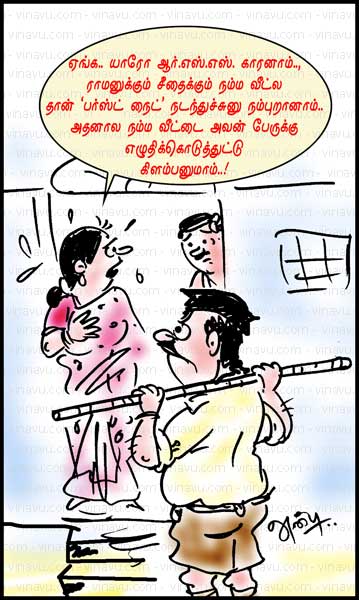
அயோத்தி - இராமன் தொடுத்த வழக்கு! குரங்கு எழுதிய தீர்ப்பு!! – தோழர் மருதையன் a'இப்பிரச்சினையில் பார்ப்பன பாசிசக் கும்பல் கையாண்டு வரும் உத்திகளை மீண்டும் நினைவுபடுத்திப் பார்ப்பது அவசியம்.

13 இலட்சம் ஆண்டுகளுக்கு முன் திரேதா யுகத்தில் பிறந்த விஷ்ணுவின் அவதாரமே இராமன் என்று கூறி,  மத நம்பிக்கையின் அடிப்படையில் இந்துக்களைத் திரட்டியது சங்க பரிவாரம். “இராமஜென்மபூமி குறித்த தொன்மை வாய்ந்த இந்துக்களின் மதநம்பிக்கையை அறிவியல் ஆய்வுக்கு உட்படுத்தவோ, தீர்ப்பளிக்கவோ நீதிமன்றத்துக்கு அதிகாரமே கிடையாது” என்றும் வாதிட்டது.

அதே இராமனை இந்து ராஷ்டிர அரசியலின் தேசிய நாயகனாக சித்தரிக்கும் வேளையில், மொகலாயப் படையெடுப்பு, பாபர் இடித்த இராமன் கோயில், அதற்கான தொல்லியல் ஆதாரம் என்று சங்க பரிவாரம் வரலாற்றைத் துணைக்கழைத்துக் கொண்டது.

1949 ஆம் ஆண்டில், சட்டவிரோதமான முறையில் இராமன் சிலையை மசூதிக்குள் வைத்து, உரிமையியல் வழக்கு தொடுப்பதற்குத் தேவையான தாவாவை திட்டமிட்டே உருவாக்கியது. இது தொடர்பாக குற்ற வழக்கு பதிவு செய்யப்பட்டிருந்த போதிலும், “அந்த இராமன் சிலை, பூமியை வெடித்துக் கிளம்பிய சுயம்பு விக்கிரகம் என்று இந்துக்கள் நம்புவதால், அதற்கு வழிபாடு நடத்துவது அரசியல் சட்டரீதியாக இந்துக்களின் மத உரிமை” என்று கூறி நீதிமன்றத்தில் பூசை நடத்தும் உரிமையை நிலைநாட்டிக் கொண்டது. 1986இல் பக்தர்கள் உள்ளே சென்று வழிபடும் உரிமையையும் நீதிமன்றத்தில் பெற்றுக் கொண்டது.

டிசம்பர் 1992இல் வழிபாட்டு உரிமை என்ற அடிப்படையில், பஜனை பாடும் உரிமையை உச்ச நீதிமன்றத்திடம் பெற்று, மசூதியை இடிப்பதற்கு அந்த உரிமையைப் பயன்படுத்திக் கொண்டது. மசூதி இடிப்பு என்ற அந்த நடவடிக்கை கிரிமினல் குற்றமாகக் கருதப்பட்டாலும், அந்தக் கிரிமினல் நடவடிக்கையின் மூலம் மசூதியின் இடிபாடுகளின் மீது நிறுத்தி வைக்கப்பட்ட இராமன் சிலைக்கு வழிபாடு நடத்துவது தமது மத உரிமை என்று கூறி நீதிமன்றத்திடம் வழிபாட்டு உரிமையையும் பெற்றுக் கொண்டது.

மசூதி இடிக்கப்பட்டு விட்டதால், “தொல்லியல் ஆய்வு, இந்துக் கோயில் இடிக்கப்பட்டதற்கான ஆதாரம்” என்று கூறி தனது முஸ்லிம் எதிர்ப்பு இந்து தேசிய அரசியல் கண்ணோட்டத்தில் வரலாற்றைத் துணைக்கு அழைத்துக் கொண்டு, தொல்லியல் சான்றுகளுக்கு வியாக்கியானம் தரத்தொடங்கியது. இருந்த போதிலும், “அந்த இடத்தில்தான் இராமன் பிறந்தான் என்ற இந்துக்களின் மதநம்பிக்கை, நீதிமன்றத்தின் ஆய்வுக்கு அப்பாற்பட்டது” என்ற தனது அறுதியான துருப்புச் சீட்டை சங்க பரிவாரம் கீழே போட்டுவிடவில்லை.

“எந்த இராமனின் பிறப்பிடம் குறித்து நீதிமன்றம் தீர்ப்பளிக்க முடியாது” என்று சங்க பரிவாரம் வாதிடுகிறதோ, அதே இராமனின் சிலையை (ராம் லல்லா) உரிமை மூல வழக்கில் ஒரு மனுதாரராக்கி, தான் பிறந்த இடத்தைத் தனக்கு கிரயம் செய்து தருமாறு அதே நீதிமன்றத்தின் முன்னால் முறையிடச் செய்து, அலகாபாத் தீர்ப்பின் மூலம் மசூதியின் மையப்பகுதி நிலத்தையும் பெற்றுவிட்டது.

இவை அனைத்தையும் தொகுத்துப் பார்க்கும்போதுதான், அரசியல் சட்ட உரிமை, மதநம்பிக்கை, வரலாறு, இந்துப் பாசிச அரசியல் ஆகியவற்றை வாளாகவும் கேடயமாகவும் தேவைக்கேற்ப எப்படியெல்லாம் சங்க பரிவாரம் பயன்படுத்தியிருக்கிறது என்பதைப் புரிந்து கொள்ள இயலும்.

கடந்த 25 ஆண்டுகளாக நடைபெற்று வரும் இந்த நாடகத்தில், சங்க பரிவாரத்தின் ஒவ்வொரு காய் நகர்த்தலுக்கும் நீதித்துறை உடந்தையாகவே இருந்து வந்திருக்கிறது. இந்து மதவெறியை எதிர்ப்பதாகக் கூறிக்கொள்ளும் போலி கம்யூனிஸ்டுகள் உள்ளிட்ட ‘மதச்சார்பற்ற’ சக்திகள், பார்ப்பன பாசிசத்தை அரசியல் ரீதியாகவும், பார்ப்பனியத்தை சித்தாந்த ரீதியாகவும் எதிர்க்கவில்லை என்பதுடன் இப்போதும் கூட “உச்சநீதிமன்றத்தை அணுகினால் முஸ்லிம்களுக்கு நியாயம் கிடைத்துவிடும்” என்று கூறி, இந்திய அரசியல் சட்டம் குறித்த பிரமையை வளர்க்கின்றனர். அலகாபாத் நீதிமன்றத் தீர்ப்பின் அடிப்படையான சில அம்சங்களைப் பரிசீலித்தோமானால், பார்ப்பனப் பாசிசத்தின் பித்தலாட்டங்கள் அனைத்துக்கும் சட்ட அங்கீகாரம் தரும் சாத்தியத்தை “மத நம்பிக்கைக்கான சுதந்திரம்” என்ற பெயரில், இந்திய அரசியல் சட்டத்தின் 25, 26ஆவது பிரிவுகள்தான் வழங்கியிருக்கின்றன என்பதைப் புரிந்து கொள்ள இயலும்.

பாபர் மசூதி வழக்கின் வரலாறு!

இந்த வழக்கின் மனுதாரர்கள் மொத்தம் 28 பேர். சன்னி வக்பு வாரியம், நிர்மோகி அகாரா, குழந்தை இராமன் விக்கிரகத்தின் (ராம் லல்லா விராஜ்மன்) சார்பில் ராமனது நெருங்கிய நண்பர் திரிலோக் நாத் பாண்டே ஆகிய மூன்று மனுதாரர்களே இதில் முக்கியமானவர்கள். இவர்களுக்கு இடையில்தான் பாபர் மசூதி வளாகம் மூன்று பங்காகப் பிரிக்கப்படவேண்டும் என்று தீர்ப்பு வழங்கப்பட்டிருக்கிறது. இவ்விவரங்களுக்குள் செல்லுமுன் சுருக்கமாக இந்த வழக்கின் வரலாற்றைத் தெரிந்து கொள்வது அவசியம்.

1949 டிசம்பர் 22ஆம் தேதி நள்ளிரவில் மசூதியின் பூட்டை உடைத்து உள்ளே ராமன் சிலை வைக்கப்பட்டதுதான் இந்த உரிமை மூல வழக்கின் தொடக்கம் என்று கருதப்பட்டாலும்  இப்பிரச்சினைக்கான விதை முந்தைய நூற்றாண்டிலேயே போடப்பட்டுவிட்டது. 17ஆம் நூற்றாண்டின் இறுதி வரையில் இன்றைய உத்தரப் பிரதேச மாநிலத்தின் எந்த ஊரிலும் ராமனுக்கு கோயில் எதுவும் இருந்ததில்லை என்றும், 1788இல் ஒரு கிறித்தவ ஜெசூட் பாதிரியார்தான் “இது இராமன் பிறந்த இடம்” என்று ஒரு குறிப்பினை போகிற போக்கில் குறிப்பிட்டு செல்கிறார் என்றும் கூறுகிறார் வரலாற்று ஆய்வாளர் டி.என்.ஜா. பாபர் மசூதியோ 1528ஆம் வாக்கில் கட்டப்பட்டிருக்கிறது.

1855ஆம் ஆண்டில்தான் முதன்முதலாக இப்பிரச்சினை இந்து தரப்பினரால் எழுப்பப்படுகிறது. அப்போது அயோத்தியை உள்ளடக்கிய பைசலாபாத் சமஸ்தானத்தின் மன்னனாக இருந்த வாஜித் அலி ஷா, பதற்றைத் தணிக்க ஒரு மூவர் குழுவை அமைக்கிறார். இந்த காலகட்டத்தில்தான் பைசலாபாத் சமஸ்தானத்தை விழுங்குவதற்கு கும்பினி ஆட்சி சதி செய்து கொண்டிருந்தது. வட இந்திய சுதந்திரப் போர் வெடிப்பதற்குக் காத்திருந்த காலம் இது. வாஜித் அலி ஷாவின் மனைவி பேகம் ஹசரத் மகல்தான் கும்பினிக்கு எதிரான போரைத் தலைமையேற்று நடத்தியவர் என்பதும், இந்தக் காலனியாதிக்க எதிர்ப்புப் போரில் முன்னுதாரணமாகச் சொல்லத்தக்க அளவில் பைசலாபாத் சமஸ்தானம் முழுவதும் இந்து முஸ்லிம் ஒற்றுமை நிலவியது என்பதும் இங்கே குறிப்பிடத்தக்கது.

பைசலாபாத் சமஸ்தானம் ஆங்கிலேயே ஆட்சியின் கீழ் வந்தபின், 1885இல் இது தொடர்பான முதல் உரிமையியல் வழக்கை மகந்த் ரகுவர் தாஸ் என்பவர் தொடர்கிறார். அன்றைய சப் ஜட்ஜ் பண்டிட் ஹரி கிஷன் அவருக்கு சாதகமாகத் தீர்ப்பளிக்கவே, அதனை எதிர்த்து முஸ்லிம்கள் மாவட்ட நீதிமன்றத்துக்கு முறையிடுகின்றனர். “இந்துக்கள் புனிதமானதாகக் கருதும் ஒரு இடத்தில் மசூதி கட்டப்பட்டிருக்கிறது என்பது துரதிருஷ்டவசமானதுதான். எனினும் சம்பவம் நடந்து 356 ஆண்டுகளுக்குமேல் ஆகிவிட்டபடியால், தற்போது இதற்கு நிவாரணம் கோருவது மிகவும் காலம் கடந்ததாகும்” என்று மகந்தின் மனுவைத் தள்ளுபடி செய்து தற்போது உள்ள நிலையே நீடிக்கவேண்டும் என்று உத்தரவிடுகிறார் மாவட்ட நீதிபதி சேமியர்ஸ்.

“இந்துக்களின் புனிதமான இடம்” என்று அவர் கருதுவதற்கான ஆவணங்கள் எதுவும் அந்த வழக்கில் தரப்படவில்லை. எவ்வித ஆதாரமும் இன்றி போகிறபோக்கில் சொல்லப்பட்ட கூற்றே அது. எனினும் மசூதி தொடர்ந்து நீடிக்க வேண்டும் என்பதுதான் அந்த தீர்ப்பின் சாரம். உரிமையியல் வழக்குகளில் பிரிட்டிஷ் ஆட்சிக்காலத்தில் வழங்கப்பட்ட தீர்ப்புகளை ஏற்றுக் கொள்வது என்பதுதான் இந்திய அரசியல் சாசனத்தின் நிலை. அந்த வகையில் இந்திய அரசியல் சட்டத்தின்படி இந்த வழக்கு ஏற்கெனவே விசாரித்து தீர்ப்பளிக்கப்பட்ட ஒன்று.

1855க்குப் பின்னர் 1948இல்தான் மீண்டும் அங்கே பிரச்சினைகள் எழுகின்றன. அது இந்தியா பாகிஸ்தான் பிரிவினையை ஒட்டி வட இந்தியா முழுவதும் கலவரம் நடைபெற்ற காலம். 1948இல் மசூதியில் தொழுகை நடத்தும் முஸ்லிம்கள் மீது இந்து வெறியர்கள் கல்லெறிவதாக புகார்கள் வருகின்றன. அயோத்தியைச் சேர்ந்த காந்தியவாதியான அட்சய பிரம்மச்சாரி என்பவர், நகரம் முழுவதும் முஸ்லிம் மக்களை இந்துவெறியர்கள் அச்சுறுத்துவதாக லால் பகதூர் சாஸ்திரிக்கு கடிதம் எழுதுகிறார்.

அக்டோபர் 1949இல் அம்மாவட்ட ஆட்சியர், மசூதியின் ஒரு புறத்தில் கோயில் கட்டிக் கொள்ளுமாறு இந்துக்களுக்கு அனுமதி அளிக்கிறார். டிசம்பர், 22, 1949 இரவில் 50 பேர் கொண்ட கும்பல் மசூதியின் பூட்டை உடைத்து உள்ளே சிலைகளை வைக்கிறது.  இது தொடர்பாக வழக்கு பதிவு செய்யப்படுகிறது.

உடனே சிலைகளை அகற்றுமாறு உ.பி முதல்வருக்கு தந்தி அடிக்கிறார் நேரு. முதல்வர் பந்த் அகற்ற மறுக்கிறார். உள்ளே வைக்கப்பட்ட சிலைகளுக்கோ யாருமே உரிமை கோரவில்லை. பிறகு 1950 இல் “சுயம்புவாகத் தோன்றியிருக்கும் ராமபிரானுக்கு வழிபாடு நடத்த தங்களை அனுமதிக்க வேண்டும்” என்று கோபால்சிங் விசாரத், பரமஹன்ஸ் என்ற இருவர் மனு தாக்கல் செய்கின்றனர். “சிலைகளை அங்கிருந்து அகற்றவோ, பூசை நடத்துவதைத் தடுக்கவோ கூடாது” என்று மாவட்ட நீதிபதி நாயர் (பின்னாளில் ஜனசங்க கட்சியில் சேர்ந்தவர்) இடைக்காலத்தடை பிறப்பிக்கிறார்.

மேலும் 9 ஆண்டுகள் கழித்து, 1959இல்தான் மேற்படி சொத்தின் மீது (அதாவது பாபர் மசூதி அமைந்துள்ள 1500 சதுர கெஜம் அளவிலான நிலம்) உரிமை கோரி,  நிர்மோகி அகாரா உரிமை மூல வழக்கை தொடுக்கிறது. இது அனுபவ பாத்தியதை அடிப்படையில் சொத்தின் மீது உரிமை கோரிய ஒரு சிவில் வழக்கு மட்டுமே. அந்த இடம் இராமன் பிறந்த இடம், மத நம்பிக்கை என்ற வாதங்களெல்லாம் நிர்மோகி அகாராவின் மனுவில் கிடையாது. இதற்கு எதிராக வேறு வழியில்லாமல் சன்னி வக்பு வாரியம் 1961 இல் எதிர்  மனு தாக்கல் செய்கிறது.

1980களின் பிற்பகுதியில், ஷா பானு பிரச்சினையில் முஸ்லிம்களை தாஜா செய்வதாக ராஜீவ் காந்தி மீது பாரதிய ஜனதா குற்றம் சாட்டியவுடனே இந்து வாக்குகளைக் கவர்வதற்காக, பூட்டியிருந்த மசூதியின் கதவுகளைத் திறக்கும் சூழ்ச்சியில் ஈடுபட்டது ராஜீவ் அரசு. 1986இல், எதிர் தரப்பான சன்னி வக்பு வாரியத்துக்கே தெரியாமல், யாரோ ஒரு பக்தர் பெயரில் மனு தாக்கல் செய்யவைத்து, ராமன் சிலையை வழிபட இந்து பக்தர்களை அனுமதிக்கும் உத்தரவை ஒரு தலைப்பட்சமாகப் பிறப்பித்தார், ‘கருங்குரங்கை விழுந்து கும்பிட்ட’ நீதிபதி பாண்டே.

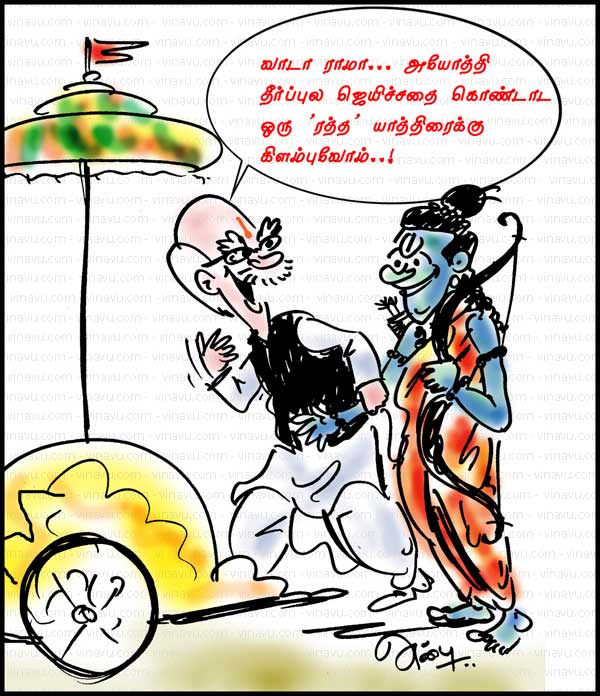
இதனைத் தொடர்ந்து ராம ஜென்மபூமி பிரச்சினையை அரசியல் ரீதியில் அறுவடை செய்வதற்கான இயக்கத்தை பாரதிய ஜனதா நாடெங்கும் கட்டத்தொடங்கியது. 1989இல் தேர்தலுக்கு சில நாட்கள் முன் பாபர் மசூதி வளாகத்தில் ராமன் கோயில் கட்டுவதற்கான அடிக்கல் நாட்டும் பூசை நடத்த சங்கபரிவாரத்தை அனுமதித்தது ராஜீவ் அரசு.
அயோத்தி - இராமன் தொடுத்த வழக்கு! குரங்கு எழுதிய தீர்ப்பு!! – தோழர் மருதையன் a'

வழக்கில் மனுதாரராக நுழைக்கப்படுகிறான் இராமன்!

ஆனால் வழக்கைப் பொருத்தவரை, ‘ராமன் பிறந்த இடம் என்ற அடிப்படையில் பாபர் மசூதி நிலத்தின் மீது உரிமை கோரும் மனு’ எதுவும் 1989 வரை தாக்கல் செய்யப்படவில்லை. “வெறும் உரிமையியல் வழக்கின் மூலம் முஸ்லிம்களிடமிருந்து இந்த இடத்தை சட்டரீதியில் கைப்பற்ற முடியாது; இந்திய அரசியல் சட்டத்தின் பிரிவு 25 வழங்கும் மத நம்பிக்கைக்கான உரிமையின் கீழ் இந்த வழக்கைக் கொண்டு வருவதன் மூலம்தான் சட்டப்படியே இதனைக் கைப்பற்ற முடியும்” என்ற சூட்சுமம் அலகாபாத் உயர்நீதிமன்ற நீதிபதி தேவகி நந்தன் அகர்வாலுக்கு மட்டுமே அன்று புரிந்திருந்தது. நீதிபதி பதவியிலிருந்து ஓய்வு பெற்ற உடனே, குழந்தை இராமனையே மனுதாரர் ஆக்கி, குழந்தை இராமனின் நெருங்கிய நண்பர், காப்பாளர் என்ற முறையில் 1989 இல் மேற்கூறிய வழக்கில் தன்னையும் இணைத்துக் கொண்டார் தேவகி நந்தன் அகர்வால்.  அடுத்த சில ஆண்டுகளில் தேவகி நந்தன் அகர்வால் இறந்து விடவே, அவருக்குப் பதிலாக ‘ராமனின் நண்பனாக’ திரிலோக்நாத் பாண்டே என்பவர் வழக்கில் தன்னை இணைத்துக் கொண்டார்.

தற்போது அலகாபாத் உயர்நீதிமன்றம் வழங்கியிருக்கும் இறுதித்தீர்ப்பு, பாபர் மசூதி வளாகத்தை மூன்றாகப் பிரித்து மூன்று மனுதாரர்களுக்கும் தரவேண்டும் என்று கூறியிருக்கிறது எனினும், சன்னி வக்பு வாரியம், நிர்மோகி அகாரா ஆகிய இருவரது மனுக்களும் உரிமையியல் வழக்குக்கு உரிய கால வரம்பு (Limitation Period) கடந்து தாக்கல் செய்யப்பட்டவை என்று கூறி தள்ளுபடி செய்யப்பட்டுவிட்டன. மசூதி அமைந்துள்ள இடத்தின் மீது உரிமை கோரும் ராமபிரானது மனு மட்டுமே நீதிமன்றத்தால் ஏற்றுக் கொள்ளப்பட்டு இத்தீர்ப்பு வழங்கப்பட்டிருக்கிறது.

பட்டா, பத்திரம் போன்ற ஆவணங்களின் அடிப்படையிலோ, அனுபோக பாத்தியதை குறித்த ஆதாரங்களின் அடிப்படையிலோ பரிசீலித்து தீர்ப்பு வழங்க வேண்டிய ஒரு உரிமை மூல வழக்கில், அவற்றையெல்லாம் புறக்கணித்து விட்டு, கடவுளின் சொத்துரிமை மற்றும் கடவுள் குறித்த இந்து பக்தனின் நம்பிக்கை ஆகியவற்றை அடிப்படையாகக் கொண்டு, இத்தீர்ப்பு வழங்கப்பட்டிருக்கிறது. இத்தீர்ப்பில் உள்ள குறைபாடுகள், முறைகேடுகள் குறித்து வேறு பல கேள்விகளை எழுப்ப இயலுமெனினும், இந்திய அரசியல் சட்டத்தின் பிரிவு 25 (மத நம்பிக்கை தொடர்பான உரிமை), பிரிவு 26 (மத நிறுவனங்களின் சொத்துக்கள் தொடர்பான உரிமை) ஆகியவைதான் அநீதியான இந்தத் தீர்ப்புக்கு அடித்தளமாக அமைந்திருக்கின்றன. எனவே அவை குறித்து புரிந்து கொள்வது அவசியம்.

சிவில் வழக்கில் இராமன் (கடவுள்) ஒரு மனுதாரர் ஆக முடியுமா?

இந்த வழக்கில் ‘குழந்தை இராமன் சிலை’ ஒரு மனுதாரராக சேர்க்கப்பட்டிருப்பது குறித்து ஏற்கெனவே குறிப்பிட்டிருந்தோம். உரிமையியல் சட்ட விதி 32 இன் படி (Order 32 of the civil procedure code) இந்துக் கோயிலின் கடவுள் சிலை சட்டரீதியான ஒரு நபராகவும், நிரந்தரமான மைனராகவும் கருதப்படுகிறது. ஒரு சிலை என்ற முறையிலும் மைனர் என்ற முறையிலும் அது தானே தனக்காகப் பேசும் ஆற்றலற்றது என்பதால், ஒரு காப்பாளர், அறங்காவலர் அல்லது பக்தர் மூலமாக மற்றவர்கள் மீது வழக்கு தொடுக்கும் உரிமை கடவுள் சிலை பெற்றிருக்கிறது. அரசியல் சட்டரீதியான இந்த உரிமையை கடவுள் சிலை பெற்றிருப்பதால், அரசியல் சட்டத்துக்கு முரணாக அந்தக் கடவுள் இழைத்திருக்கக் கூடிய குற்றங்களுக்காக அந்தக் கடவுளுக்கு எதிராக சிவில் அல்லது கிரிமினல் வழக்குகளை யாரும் தொடர முடியாது. சொத்து தொடர்பான வழக்குகளை மட்டுமே கடவுளுக்கு எதிராகத் தொடரமுடியும்.

இந்திய அரசியல் சட்டம் இந்துக் கடவுளுக்கு வழங்கியிருக்கும் இந்த உரிமை இசுலாமிய, கிறித்தவ கடவுளர்களுக்கோ பிற மதக் கடவுளர்களுக்கோ கிடையாது. உலகின் வேறு எந்த நாட்டிலும் கடவுளுக்கு இப்படிப்பட்ட சட்டரீதியான உரிமை கிடையாது. கடவுளின் பெயரில் சொத்தை பதிவு செய்து விட்டு அதிகாரத்தில் இருக்கும் மன்னனோ, நிலப்பிரபுவோ, அறங்காவலரோ அதனை அனுபவிக்கும் வசதிக்காக பாரம்பரியமாக செய்யப்பட்டிருக்கும் இந்த ஏற்பாட்டை அரசியல் சட்டம் அங்கீகரித்திருக்கிறது. தில்லை நடராசனுக்கு எழுதி வைக்கப்பட்ட நிலத்தை நடராச தீட்சிதர் கையெழுத்துப் போட்டு விற்கும் முறைகேடுகள் இந்த ஏற்பாட்டின் மூலம்தான் சாத்தியமாகியிருக்கின்றன. “உலகம் கடவுளுக்கு கட்டுப்பட்டது, கடவுள் மந்திரத்துக்கு கட்டுப்பட்டவர், மந்திரம் பார்ப்பானுக்கு கட்டுப்பட்டது, எனவே உலகம் பார்ப்பானுக்கு கட்டுப்பட்டது” என்று கூறப்படும் சமஸ்கிருத சுலோகம் இதற்கும் பொருந்தும்.

சட்டப்பிரிவு 25 இந்துக் கடவுளுக்கு வழங்கியுள்ள இந்த தனிநபர் என்ற சட்டரீதியான அந்தஸ்தை, கார்ப்பரேஷன்களுக்கு (முதலாளித்துவ கூட்டுப்பங்கு நிறுவனங்கள்) வழங்கப்பட்டுள்ள உரிமையுடன் ஒருவகையில் ஒப்பிட்டுப் புரிந்து கொள்ளலாம். போபால் வழக்கில் யூனியன் கார்பைடு நிறுவனத்தின் தலைவர் ஆண்டர்சன் மீது மட்டுமின்றி யூனியன் கார்பைடு கார்ப்பரேஷன் என்ற நிறுவனத்தின் மீதும் கிரிமினல் வழக்கு நிலுவையில் உள்ளது. எனினும் சட்டப்படி ஆண்டர்சனைத்தான் கைது செய்ய முடியுமேயன்றி, கார்ப்பரேஷனைக் கைது செய்ய முடியாது.
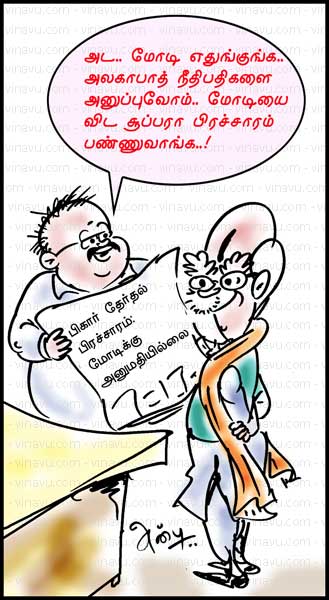
அயோத்தி - இராமன் தொடுத்த வழக்கு! குரங்கு எழுதிய தீர்ப்பு!! – தோழர் மருதையன் a'இந்துக் கடவுள் விசயத்தில், கடவுளின் குற்றத்துக்காக கடவுள் மீது மட்டுமல்ல, கடவுளின் காப்பாளர் மீதும் வழக்கு தொடர இயலாது. அதே நேரத்தில் கடவுள் சிலை நிரந்தரமான மைனர் என்ற சட்ட அந்தஸ்தைப் பெற்றிருப்பதால், உரிமையியல் வழக்கில் வக்பு வாரியத்துக்கும், நிர்மோகி ஆகாராவுக்கும் விதிக்கப்பட்டுள்ள கால வரம்பு என்பது கடவுளுக்குக் கிடையாது. இந்த அடிப்படையில்தான், 1949 இல் எழுந்த பிரச்சினைக்கு 1961 இல் தாக்கல் செய்யப்பட்ட அவர்களது மனுக்கள் காலம் கடந்தவை என்று அலகாபாத் உயர்நீதிமன்றத்தால் நிராகரிக்கப்பட்டன. அதே நேரத்தில் 1989 இல் இராமபிரானின் சார்பில் தேவகி நந்தன் அகர்வால் தாக்கல் செய்த மனு ஏற்றுக்கொள்ளப்பட்டது. இந்துக் கடவுள் பெற்றிருக்கும் இந்த சிறப்புரிமையை அரசியல் சட்டத்தின் 25, 26 வது பிரிவுகளே வழங்குகின்றன என்பது குறிப்பிடத்தக்கது.

இராமன் பிறந்த இடம் என்பதனாலேயே அது இராமனின் சொத்தாகிவிட முடியுமா? பக்தனின் வழிபாட்டு உரிமை சொத்துரிமை ஆகிவிட முடியுமா?

இத்தீர்ப்புக்கு எதிரான விமரிசனங்கள் மற்றும் கேள்விகளில் இவை இரண்டும் மிகவும் முக்கியமானவை. ‘மசூதியின் மையப்பகுதியில்தான் இராமன் பிறந்தான்’ என்று இந்துக்கள் நம்புவதாக மூன்று நீதிபதிகளுமே ஏற்றுக்கொள்கிறார்கள். அயோத்தியிலேயே சுமார் 5,6 இடங்கள் இராமன் பிறந்த இடங்களாக கருதப்பட்டு வந்தன. பாபர் மசூதிதான் இராமன் பிறந்த இடம் என்ற கருத்து இந்து பாசிஸ்டுகளால் 80 களில் தொடங்கி உருவாக்கப்பட்ட கருத்தேயன்றி, இந்துக்கள் அனைவரின் நம்பிக்கை அல்ல. இராமன் கடவுள் என்பதும் எல்லா இந்துக்களின் நம்பிக்கை அல்ல, இராவணனைக் கடவுளாக வழிபடும் இந்துக்களும் உண்டு. இந்துக்கள் மத்தியிலேயே நிலவும் இத்தகைய மாற்றுக் கருத்துகளையெல்லாம் ஒதுக்கிவிட்டு, சங்கபரிவாரம் உருவாக்கிய கருத்தையே இந்து சமூகத்தின் தொன்மையான, அத்தியாவசியமான நம்பிக்கை என்று வழிமொழிகிறது இத்தீர்ப்பு.

ஒரு குறிப்பிட்ட மதத்தின் சாராம்சமான நம்பிக்கை எது என்று வியாக்கியானம் அளிக்கவும், அதன் அடிப்படையில் அரசியல் சட்டத்தின் 25 வது பிரிவின் கீழ் அந்த மதத்தினரின் உரிமைகளை அனுமதிக்கவுமான அதிகாரத்தை உயர்நீதி மன்றத்துக்கும், உச்ச நீதிமன்றத்துக்கும் அரசியல் சட்டம் வழங்கியுள்ளது. அந்த அதிகாரத்தைப் பயன்படுத்தியே இது இந்துக்களின் நம்பிக்கை என்று அலகாபாத் உயர்நீதிமன்றம் கூறுகிறது.

அது இந்துக்களின் நம்பிக்கைதான் என்று ஒரு வாதத்துக்கு வைத்துக் கொண்டாலும், அத்தகைய மத நம்பிக்கையின் அடிப்படையில் மாற்றான் சொத்தின் மீது உரிமை கோரமுடியுமா என்ற கேள்விக்கு இத்தீர்ப்பு கீழ்க்கண்டவாறு பதிலளிக்கிறது. இராமன் மட்டும்தான் கடவுள், அவன் பிறந்த பூமி என்பது ஒரு அசையாச் சொத்து என்று பார்ப்பது தவறு என்றும், இராமன் பிறந்த அந்த இடமே (பூமியே) வாயு பகவானைப் போல தன்னளவில் அங்கே விரவி நிற்கின்ற கடவுளாகும் என்று கூறி ஸ்மிருதிகளை மேற்கோள் காட்டி விளக்கம் அளிக்கிறது இத்தீர்ப்பு.

ஒரு கோயில் இடிக்கப்பட்டு விட்டாலும், அங்கே கடவுள் சிலையே இல்லாமல் போனாலும், அந்த இடம் தனது தெய்வீகத்தன்மையை இழந்து விடுவதில்லை என்றும், கோயில் இருந்த அந்த இடமே ஒரு கடவுளாகவும், வழக்காடும் உரிமை பெற்ற நபராகவும் இருக்கிறது என்று கூறுகின்றது இத்தீர்ப்பு. இதற்கு ஆதரவாக உச்ச நீதிமன்றத் தீர்ப்பையும் அலகாபாத் நீதிமன்றம் மேற்கோள் காட்டுகிறது.

எனவே, இந்தத் தீர்ப்பின் படி, குறிப்பிட்ட அந்த இடத்தில் இராமன் சிலை இருந்தாலும் இல்லாமல் போனாலும் அவன் பிறந்த பூமி என்பதே சுயம்புவான கடவுளாகிவிடுகிறது. நிலம் என்ற முறையில் அது ஒரு சொத்துக்கான தன்மையைப் பெற்றிருப்பது உண்மையே என்றாலும், அந்த நிலமே கடவுளாகவும் இருப்பதால் அந்த இடத்தை (இராமனைத் தவிர) வேறு யாரும் தமது சொத்தாக ஆக்கிக் கொள்ள முடியாது. இறையாண்மை கொண்ட அரசாங்கத்துக்கே கூட அந்த நிலத்தை (கடவுளை) கையகப்படுத்தும் அதிகாரம் கிடையாது என்கிறது இந்தத் தீர்ப்பு.

கோயில் இடிக்கப்பட்டாலும் கோயிலின் கடவுள் தன்மை அகன்றுவிடுவதில்லை என்ற அடிப்படையிலும், ராம ஜென்மபூமியே கடவுளாக இருப்பதாலும், மசூதியைக் கட்டிய பின்னர்கூட அந்த இடம் பாபருடைய சொத்தாகி விட்டதாகக் கருத முடியாது; அது இராமனுடைய சொத்தாகவே இருக்கிறது என்று விளக்கமளிக்கிறது இத்தீர்ப்பு. மேலும் உரிமையியல் சட்டப்படி இந்துக் கடவுள் நிரந்தர மைனர் என்று கருதப்படுவதால், மைனரின் சொத்தை எதிர் அனுபோகத்தின் மூலம் (adverse possession) பிறர் கைப்பறிக் கொள்வது செல்லத்தக்கதல்ல என்று, உரிமையியல் சட்டத்தின் அடிப்படையிலும் இதற்கு விளக்கமளிக்கிறது அலகாபாத் தீர்ப்பு. அந்த இடத்தில் ஒரு மசூதி இருந்தது என்ற உண்மையையே நிராகரிக்கும் இந்த வாதத்துக்கும், பக்தனின் மத நம்பிக்கை வழியாக கடவுள் தன்னுடைய சொத்துரிமையை நிலைநாட்டிக் கொள்ளும் ஏற்பாட்டுக்கும் அரசியல் சட்டத்தின் 25ஆவது பிரிவுதான் அடித்தளமாக இருக்கிறது.

அயோத்தி - இராமன் தொடுத்த வழக்கு! குரங்கு எழுதிய தீர்ப்பு!! – தோழர் மருதையன் a'

இந்து மதவெறி பாசிஸ்டுகளால் இடிக்கப்படும் பாபர் மசூதி

இராம ஜென்மபூமி புனிதம் என்றால், மசூதி புனிதமில்லையா?
சட்டத்தின் முன் அனைவரும் சமம் இல்லையா?

எதார்த்தமாக சிந்திக்கும் எந்த ஒரு மனிதனுக்கும் எழக்கூடிய நியாயமான கேள்வி இது. எல்லாக் குடிமக்களுக்கும் சமமான மத உரிமை இருப்பதாக நாம் கருதிக் கொண்டிருக்கலாம். ஆனால் நமது அரசியல் சட்டம் அவ்வாறு கூறவில்லை. மதம் என்பது ஒரு தனிமனிதனின் நம்பிக்கை சார்ந்த விசயம் மட்டுமே என்று வரையறுக்கப்படும் இடத்தில்தான் இந்த உரிமை சமமானதாக இருக்க முடியும். நமது அரசியல் சட்டம் மதநிறுவனங்களின் உரிமையையும் அங்கீகரிப்பதால், தனிநபரின் மத உரிமை என்பது நிறுவனத்தின் உரிமைக்கு உட்பட்டதாகிறது.

மத உரிமைகளைப் பொருத்தவரை “ஒவ்வொருவருக்கும் அவரவர் மதக் கோட்பாட்டுக்கு ஏற்ப” என்றுதான் அரசியல் சட்டத்தின் பிரிவு 25 கூறுகிறது. இந்த அடிப்படையில்தான் இந்து மதத்தில் பார்ப்பனரல்லாதாரும், பெண்களும் அர்ச்சகராக முடியாமல் தடுக்கும் ஆகமவிதிகளும், இசுலாமிய ஆண்களுக்கு நிகரான உரிமைகளைப் பெண்களுக்கு மறுக்கும் ஷரியத் சட்டமும் சட்டப்பிரிவு 25இனால் நியாயப்படுத்தப் படுகின்றன.

ஒரு மதத்தின் உறுப்பினர்களுக்குள் ஏற்றத்தாழ்வை அனுமதிக்கும் இந்த சட்டப்பிரிவுதான், இரு வேறு மதத்தினருக்கு இடையிலான உரிமையிலும் ஏற்றத்தாழ்வைக் கொண்டுவருகிறது. இந்திய விமானப்படையில் பணியாற்றும் சீக்கியர்கள் தாடி வைத்துக் கொள்ள அனுமதிக்கப்பட்டிருப்பதைப் போல, தன்னையும் அனுமதிக்க வேண்டும் என்ற ஒரு முஸ்லிம் விமானப்படை அதிகாரி தொடுத்த வழக்கை  நிராகரித்த உச்சநீதிமன்றம், ஒரு சீக்கியர் தாடி வைத்துக் கொள்வது சீக்கிய மதக் கோட்பாடுகளின் படி அத்தியாவசியமானது என்றும், ஆனால், ஒரு முஸ்லீமுக்கு தாடி அத்தியாவசியம் என்று இசுலாமிய மதக் கோட்பாடுகள் கூறவில்லை என்றும் தீர்ப்பளித்தது உச்ச நீதிமன்றம்.

‘கோயில் என்பது தெய்வத்தின் இருப்பிடம், குறிப்பிட்ட இடம் இராமன் பிறந்த இடம்’ என்ற நம்பிக்கைகள் இந்து சமூகத்தின் புனிதமான, புராதனமான, அத்தியாவசியமான நம்பிக்கைகள் என்று அங்கீகரிக்கும் அலகாபாத் தீர்ப்பு, “இசுலாமியக் கோட்பாடுகளின் படியே மசூதி என்பது புனிதமானதோ, இறைவனின் இருப்பிடமோ இல்லை” என்றும் விளக்கம் கூறுகிறது. ‘தொழுகை நடத்துவதற்கான ஒரு இடம்’ என்பதற்கு மேல் மசூதிக்கு மதம் சார்ந்த புனிதத்தன்மை எதுவும் கிடையாது என்று ஏற்கெனவே உச்சநீதிமன்றமும் (இஸ்மாயில் பரூக்கி வழக்கு) இது குறித்து தீர்ப்பளித்துள்ளது.

இன்னும் ஒரு படி மேலே போய், இசுலாமியக் கோட்பாடுகளின் படியே ஒரு மசூதிக்குரிய இலக்கணங்கள் பாபர் மசூதிக்கு இல்லை என்பதை தனது தீர்ப்பில் விளக்குகிறார் நீதிபதி சர்மா. தனிநபரின் நம்பிக்கை, வழிபாட்டு உரிமை ஆகியவற்றைப் பின்னுக்குத் தள்ளிவிட்டு, மதக் கோட்பாடுகளை முன்நிறுத்தும் இந்த அணுகுமுறைதான் அரசியல் சட்டப்பிரிவு 25 இன் சாரமாகவும் இருக்கிறது.

1949 இல் திருட்டுத்தனமாக ராமன் சிலை வைக்கப்பட்டதா இல்லையா? 1992 இல் பாபர் மசூதி இடிக்கப்பட்டதா இல்லையா? இவை குறித்து தீர்ப்பு என்ன கூறுகிறது?

திருட்டுத்தனமாக சிலை வைக்கப்பட்டதை மூன்று நீதிபதிகளும் ஏற்கின்றனர். ஆனால் அது பற்றி தீர்ப்பு கருத்து எதுவும் கூறவில்லை. ஒரு வேளை சிலை வைக்கப்பட்டிராவிட்டாலும், இராமஜென்மபூமி என்ற அடிப்படையில், அந்த இடமே கடவுள்தான் என்பதே பெரும்பான்மை நீதிபதிகளின் கருத்து. மசூதிக்குள் சிலை வைக்கப்பட்டதன் காரணமாக, சிலை வணக்கத்தை மறுக்கும் முஸ்லிம்கள் அங்கே தொழுகை நடத்தவில்லை. அதே நேரத்தில் அங்கே பூசைநடத்த நீதிமன்றம் அனுமதித்திருக்கிறது. தொழுகை நடத்தவில்லை என்பதை, முஸ்லீம்களது அனுபோகத்தில் மசூதி இல்லை என்பதற்கான சான்றாக நீதிமன்றம் எடுத்துக் கொண்டிருக்கிறது.

1992 மசூதி இடிப்பைப் பற்றி இத்தீர்ப்பு எதுவுமே கூறவில்லை. மசூதி என்பது முஸ்லிம் மதத்தைப் பொருத்தவரை புனிதமான இடம் என்று கருதப்படுவதில்லை என்பதால், பாபர் மசூதி இடிப்பு என்பதை ஒரு வழிபாட்டுத் தலத்தை இடித்ததாக சித்தரிக்க முடியாது என்றும், சட்டவிரோதமாக ஏதோ ஒருகட்டிடம் இடிக்கப்பட்டது என்பதற்கு மேல் டிசம்பர் 6ஆம் தேதி நிகழ்வில் எந்த முக்கியத்துவமும் இல்லை என்றும், இஸ்மாயில் பரூக்கி வழக்கில் உச்ச நீதிமன்றத்தின் தீர்ப்பைக் காட்டி சுப்பிரமணியசாமி கருத்து கூறியிருப்பது இங்கே குறிப்பிடத்தக்கது.அலகாபாத் தீர்ப்பும் இந்த கண்ணோட்டத்தையே பிரதிபலிக்கிறது.

1949 சிலை வைப்பும்,  1992 மசூதி இடிப்பும் குற்றச்செயல்கள். குற்றத்தில் பிறந்தது எப்படி கோயில் ஆக முடியும், புனிதமானதாக முடியும்?

சட்டப்படி குற்றம் என்று வரையறுக்கப்பட்டுள்ள பல நடவடிக்கைகள், மத ரீதியில் புனிதமாக்கப்பட்டிருக்கின்றன. அவை மத உரிமைகளாகவும் அங்கீகரிக்கப்பட்டிருக்கின்றன. பால்ய விவாகம் என்பது சட்டப்படி குற்றம். ஆனால் பால்ய விவாகம் நடந்து முடிந்து விட்டால், அதனை நடத்தி வைத்தவர்களைத் தண்டிக்க முடியுமே அன்றி, அந்தத் திருமணம் செல்லாது என்று ஆகிவிடாது. இதுதான் சட்டத்தின் நிலை. அதே போல, மசூதியை இடித்ததும், திருட்டுத்தனமாக சிலையை வைத்ததும் குற்ற நடவடிக்கைகளே என்றபோதிலும், அவ்வாறு வைக்கப்பட்ட சிலை புனிதமற்றது ஆகிவிடுவதில்லை. பக்தர்களும் வழிபாட்டு உரிமையை இழந்து விடுவதில்லை.  சட்டவிரோதமானவை எனினும், சட்டப்பிரிவு 25 வழங்கும் மத நம்பிக்கைக்கான உரிமையால் இந்த குற்றங்கள் புனிதப்படுத்தப்பட்டிருக்கின்றன.

தொகுத்துக் கூறினால்,

1992 மசூதி இடிப்பு என்பது இந்து பாசிஸ்டுகள் நிகழ்த்திய ஒரு கிரிமினல் நடவடிக்கை. தற்போதைய தீர்ப்பு அந்த மசூதி இடிப்பை சட்டரீதியாக நியாயப்படுத்துகிறது. ஒருவேளை 1992இல் மசூதி இடிக்கப்பட்டிராவிட்டால், தற்போதைய தீர்ப்பை அமல்படுத்துவதற்காக மசூதியை இடிக்கச்சொல்லி அலகாபாத் உயர் நீதிமன்றம் உத்திரவிட்டிருக்குமா என்றுகூட தீர்ப்பை விமரிசிக்கும் சிலர் கேள்வி எழுப்பியிருக்கின்றனர்.

அரசியல் சட்டப்பிரிவு 25 இந்து பாசிஸ்டுகளின் கருத்தை அரசியல் ரீதியாக வழிமொழிகிறது. 1949இல் திருட்டு சிலைக்கு வழிபாடு நடத்த அனுமதித்தது முதல், 1992 டிசம்பர் 6 அன்று பஜனை பாட உச்சநீதிமன்றம் அளித்த அனுமதி வரையில் அனைத்தும் சட்டப்பிரிவு 25ந்தால்தான் நியாயப்படுத்தப்படுகின்றன.

வேறு வார்த்தைகளில் சொல்வதாயின், இந்து பாசிஸ்டுகள் கடப்பாரை ஏந்தும் உரிமையை வழிபாட்டுரிமை என்ற பெயரில் உத்திரவாதப்படுத்தியது சட்டப்பிரிவு 25. தற்போது மசூதி இடிப்பை நியாயப்படுத்தியிருப்பதும் சட்டப்பிரிவு 25 தான். இவை இரண்டுக்கும் இடையிலான இடைவெளியில் நிகழ்ந்த சம்பவம்தான் மசூதி இடிப்பு.

எனவே, இனி ஒரு மசூதி இடிப்பு நடைபெறாமல் தடுக்க வேண்டுமானால், மசூதி இடிப்பின் குற்றவாளிகளைத் தண்டிக்க வேண்டுமானால், அலகாபாத் தீர்ப்பை முறியடிக்க வேண்டுமானால், பார்ப்பனியத்தையும், பார்ப்பன பாசிசத்தையும், எல்லா வகையான மதப் பிற்போக்குகளையும் பாதுகாத்து நிற்கும் அரசியல் சட்டத்தின் பிரிவு 25 மற்றும் 26ஐ நாம் இடித்துத் தள்ள வேண்டும். தற்போதைய அரசியல் சட்டத்தின் வரம்புக்குள் நின்று பார்ப்பனியத்தையோ, பார்ப்பன பாசிசத்தையோ ஒரு சில சந்தர்ப்பங்களில், ஒரு சில அம்சங்களில் கட்டுப்படுத்த மட்டுமே முடியும். ஆனால் பார்ப்பனியம் மற்றும் மதப்பிற்போக்கின் ஆன்மாவைப் பாதுகாக்கும் கவசங்களாகவே மேற்கூறிய இரு சட்டப்பிரிவுகளும் வடிவமைக்கப்பட்டிருக்கின்றன. அலகாபாத் நீதிமன்றத் தீர்ப்பு அதனை இன்னொருமுறை நிரூபித்திருக்கிறது. இந்திய அரசியல் சட்டம் மதச்சார்பின்மைக்கு எதிரானது என்ற உண்மையை அம்பலப்படுத்துவதற்கான வாய்ப்பையும் அளித்திருக்கிறது.


நன்றி: வினவு!

http://www.vinavu.com/2011/01/08/on-ayodhya-verdict/

சில தீர்ப்புகள், திருத்தங்கள்..(7)


A verdict that legitimises the Masjid demolition

T. R. Andhyarujina

File photo of the makeshift structure at the site where the Babri Masjid stood. The Ayodhya judgments of the Allahabad High Court make no note of the demolition December 6, 1992.

The Hindu File photo of the makeshift structure at the site where the Babri Masjid stood. The Ayodhya judgments of the Allahabad High Court make no note of the demolition December 6, 1992.

Had the Masjid not been demolished, would the court have ordered a division and partitioning of the disputed site in the manner it has directed?

The absence of any condemnation of the vandalism of the demolition of the Babri Masjid on December 6, 1992 is a conspicuous aspect of the Ayodhya verdict of the Allahabad High Court.

The Supreme Court in its judgment of 1994 said of the demolition: “Within a short time, the entire structure was demolished and razed to the ground. Indeed, it was an act of ‘national shame.' What was demolished was not merely an ancient structure, but the faith of the minorities in the sense of justice and fairplay of the majority. It shook their faith in the rule of law and constitutional processes. A 500-year-old structure which was defenceless and whose safety was a sacred trust in the hands of the State government was demolished.”

The White Paper issued by the government on the demolition said: “The demolition of the Ram Janma Bhoomi-Babri Masjid structure at Ayodhya on 6.12.1992 was a most reprehensible act. The perpetrators of this deed struck not only against a place of worship, but also at the principles of secularism, democracy and the rule of law enshrined in our Constitution. In a move as sudden as it was shameful, a few thousand people managed to outrage the sentiments of millions of Indians of all communities who have reacted to this incident with anguish and dismay.”

So great was the sense of outrage that the Prime Minister and the Central Government said on December 7, 1992 and December 27, 1992 that the mosque would be re-built.

The Ayodhya judgments of the Allahabad High Court make no note of the vandalism of December 6, 1992. On the other hand, they take the demolition as a fait accompli, as if the disputed 2.77-acre site was vacant land. After holding that the area beneath the central dome of the erstwhile Masjid must be allotted to Hindus because of their faith that Lord Ram's place of birth was there, and the areas covered by the Ram Chabutara and Sita Rasoi should be allotted to the Nirmohi Akhara, the court has said that the remaining area of the disputed site should be divided, two-thirds to the two Hindu plaintiffs and one-third to the Muslim plaintiff by metes and bounds. These judgments, therefore, legalise and legitimise the 1992 demolition, as the decree of the court proceeds on the basis that there is no Masjid on the disputed site today.

It is an elementary rule of justice in courts that when a party to a litigation takes the law into its own hands and alters the existing state of affairs to its advantage, (as the demolition in 1992 did in favour of the Hindu plaintiffs), the court would first order the restitution of the pre-existing state of affairs.

If that is not possible, as in this present case, the court would not allow an act of lawlessness to benefit the party that indulged in it. This elementary rule of justice, the Allahabad High Court judgment ignores.

The test of the soundness of the court's verdict is this: assuming the correctness of the High Court's findings that the area beneath the central dome of the mosque was the birthplace of Lord Ram or that the Masjid was built over the ruins of a temple in 1528, if the Masjid had not been demolished and had remained on the site, would the court have ordered a division and partitioning of the disputed site in the manner it has directed? This could have been done only by the Masjid of 500 years being brought down to create a vacant site — which clearly would have been an impossible direction.

If that is not the case, can the court take advantage of the illegal act of demolition of the Masjid and order a division of the disputed site in the manner it has done?

The majority verdict of the High Court is well intentioned, meant to be a measure of compromise and national reconciliation. If it is accepted in that spirit by the Muslim community, it will resolve a burning communal problem of our nation. This is the consummation to be wished for. If this does not happen and the court's verdict has to be accepted, it will leave simmering resentment in the Muslim community, for it will see that as the court's condonation and legitimisation of a place of worship having been vandalised.

(The writer is a Senior Advocate and a former Solicitor-General of India.)

http://www.thehindu.com/opinion/op-ed/article813035.ece

© The Hindu

Published: October 5, 2010 02:11 IST | Updated: October 5, 2010 02:11 IST

சில தீர்ப்புகள், திருத்தங்கள்..(6)


Fundamental issue in Ayodhya case

Subramanian Swamy

A file photo of the demolition of the structure at Ayodhya.

AFP A file photo of the demolition of the structure at Ayodhya.

The Babri Masjid was unauthorisedly demolished and the culprits must be brought to book under the rule of law. But in law, a temple and a mosque cannot be considered on a par as far as sacredness is concerned. This is the fundamental truth constantly being evaded on the Ayodhya issue.

T.R. Andhyarujina is a highly respected and accomplished lawyer who is very skilled in court craft. His major point in his Op-Ed [“A Verdict that legitimises the Masjid demolition,” The Hindu, Oct.5, 2010] is that the 8,700-plus pages judgment of the Lucknow Bench of the Allahabad High Court on the Ayodhya dispute implicitly condones the 1992 demolition of the Babri Mosque structure because the Court did not take judicial notice and draw adverse inference [in fact no reference] against the directly or de facto affiliated parties (in the litigation before the Bench) in that destruction.

I do not dismiss this point because the structure was indeed unauthorisedly demolished and therefore the culprits and the planners of this demolition, whoever they are, have to be brought to book to uphold the rule of law. For this purpose, there is an ongoing criminal case in a special CBI-designated Sessions Court.

In this context, the question is whether every court will have to take judicial notice of this alleged illegal violent event even after the Supreme Court of India has taken such notice. Mr. Andhyarujina himself quotes the Supreme Court judgment [reported in (1994) 6SCC376] in which the court, while absolving the Hindus as a community of the blame, nevertheless held that “Hindus must bear the Cross for it.” This was an extraordinary judicial observation and has profound implications for all communities whenever religious premises are destroyed.

The fact nevertheless remains that throughout the last several centuries, Hindus have deeply held as sacred as Ram's birthplace that exact spot where the Babri Masjid once stood. This is recorded in many official and judicial proceedings.

In 1885, for example, Mahant Raghubar Das, in a Suit No. 61/280 of 1885 filed in the Court of the Faizabad Sub Judge against the Secretary of State for India (who was based in London), prayed for permission to build a temple inside the perimeter of the mosque. His suit was dismissed on March 18, 1886, but in his Order the Sub-Judge, an Englishman, stated: “It is most unfortunate that a Masjid should have been built on land specially held sacred by the Hindus. But as the event occurred 358 years ago, it is too late now to remedy the grievance.” Since the British as policy never sought to disturb the communal and social status quo in India as evidenced, for example, on the ‘Sati question,' the judge took the easy way out and dismissed the suit.

Temple did exist

It is now well established by GPRS-directed excavations, done under the Allahabad High Court monitoring and verification in 2002-03, that a large temple did exist below where that Babri Masjid structure once stood. Inscriptions found during excavations describe it as a temple of Vishnu Hari who had killed the demon king Dasanan [Ravana]. The Archaeological Survey of India (ASI) confirmed these findings on investigations that were directed by the High Court.

A fundamental question arises: Can a temple and a masjid be considered on a par as far as sacredness is concerned? Relying on two important apex judgments that hold the field today, the answer is: No. A masjid is not an essential part of Islam religion, according to a majority judgment of a Constitution Bench of India's Supreme Court (op.cit. 1994), whereas according to the House of Lords, U.K. (1991), the temple is always a temple even if in disuse or ruins.

In the famous Ismail Farooqui vs Union of India case [reported in (1994) 6 SCC 376], the Supreme Court of India observed: “It has been contended that a mosque enjoys a particular position in Muslim law and once a mosque is established and prayers are offered in such a mosque, the same remains for all time to come a property of Allah … and any person professing Islamic faith can offer prayer in such a mosque, and even if the structure is demolished, the place remains the same where namaz can be offered “ [para 80].

The Constitution Bench then rejected this contention, stating: “The correct position may be summarised thus. Under Mohammedan law applicable in India, title to a mosque can be lost by adverse possession. A mosque is not an essential part of the practice of the religion of Islam and namaz (prayer) can be offered anywhere, even in the open. Accordingly, its acquisition is not prohibited by the provisions in the Constitution of India”(para 82).

Thus what was wrong with the demolition of the Babri Masjid on December 6, 1992 was that it was unauthorised by law and hence a criminal offence. Otherwise any government can deprive Muslims of the Babri Masjid, which would be lawful if the government decides to do so in the interest of public order, public health and morality (Article 25 of the Constitution). This is the position in Islamic law as well since in Saudi Arabia the authorities demolish mosques to lay roads. Even the mosque where Prophet Mohammed used to pray was demolished.

Nataraja statue case

A temple however is not in the same category as a mosque in law. When I was Union Law and Justice Minister, this question of the status of a temple – even if in ruins or without worship – came up before me in November 1990 in a case of a smuggled-out bronze Nataraja statue that was up for sale in London. The Government of India under Prime Minister Rajiv Gandhi had decided to file a case in the London trial court in 1986 for recovery. The Nataraja statue had by then been traced to a temple in ruins in Pathur, Thanjavur district. A farmer named Ramamoorthi had unearthed it in 1976 while digging mud with a spade near his hut.

When the news spread, touts of an antique dealer reached Ramamoorthi, paid a small sum, and smuggled it out to London, where in 1982 it was sold to a private company. In turn, the buyer sent it to the British Museum for appraisal and possible purchase. By then the Government of India was on to it and asked the British government to take action. The Nataraja idol was seized by the London Metropolitan Police, the company sued the police in court for recovery, but lost the case. An appeal was filed in the Queens Bench, which was dismissed on April 17, 1989. The buyer company went to the House of Lords.

On February 13, 1991, when I was Union Law Minister, the landmark judgment dismissing the buyer's final appeal [see (1991) 4 All ER 638] was delivered. The Bench consisting of Justices Purchas, Nourse, and Leggatt concluded: “We therefore hold that the temple is acceptable as party to these proceedings and that it is as such entitled to sue for the recovery of the Nataraja” [page 648 para g]. Thus a disused temple in ruins became a party, and we as Siva bhaktas as de facto trustees thus recovered the Nataraja idol.

No such ruling anywhere in any court exists for a mosque for the simple reason that a mosque in Islam is just a facilitation centre for reading namaz, and has no essentiality for Islam as a religion.

It can therefore be demolished and/or shifted in India under the Constitution as any building can — but of course authorisedly for a public purpose such as public health, public order or morality. The Union Government is committed by virtue of its affidavit filed in the Supreme Court in 1994 to do so if it is found that a temple structure exists below the mosque site. It must hence perform now and deliver on its commitment on oath sworn in the Supreme Court.

This is the fundamental truth in the Ayodhya dispute that is being constantly evaded by those criticising the Allahabad High Court Judgment.

(The writer is a former Union Law Minister and the Convenor of the Legal and Parliamentary Cells of the Hindu Dharma Acharya Sabha.)

http://www.thehindu.com/opinion/op-ed/article818314.ece

© The Hindu

Published: October 8, 2010 01:52 IST | Updated: January 8, 2011 14:45 IST

சில தீர்ப்புகள், திருத்தங்கள்..(5)

Muslims protest SC judge's beard remark

Mohammed Wajihuddin, TNN, Apr 1, 2009, 02.03am IST

MUMBAI: Muslim organisations have expressed displeasure over Supreme Court judge Markandeya Katju's observations that growing a beard was akin to promoting `Talibanisation' in the country. The judge had made the remark while rejecting a Muslim student's plea that he be allowed to sport a beard to his school.
"This is a shocking remark and has hurt the sentiments of community members. We are planning to file a plea against the verdict,'' Rajya Sabha MP and Jamiatul Ulema-e-Hind leader Maulana Mehmood Madni said. "Indian ulema are vehemently opposed to Taliban and its dangerous agenda. The verdict may affect our efforts to quell misconceptions about Islam.''
Muslims are now worried that the verdict may be used to harass Muslims in the future.
All-India Muslim Majlis-e-Mushawarat president Zafarul Islam Khan called Justice Katju's remarks "unfortunate''. "Growing a beard is not mandatory, but part of the Muslim faith. Our organisation will approach the court against the verdict,'' Khan said.
"Muslims who don't sport a beard accept that they are wrong because growing a beard is part of the Sunnah (Prophet's traditions). Talibanisation and growing a beard are poles apart," Maulana Mahmood Madni of the All-India Ulema Council said. "The court should not have made such a sweeping remark which could only create problems for Muslims.''
toireporter@timesgroup.com

Read more: Muslims protest SC judge's beard remark - The Times of India http://timesofindia.indiatimes.com/city/mumbai/Muslims-protest-SC-judges-beard-remark/articleshow/4341750.cms#ixzz1CLojxw3I

சில தீர்ப்புகள், திருத்தங்கள்..(4)

SC rejects Muslim's plea to sport beard, says no 'Talibanisation of India'

PTI, Mar 30, 2009, 11.02pm IST

NEW DELHI: Rejecting the plea of a Muslim student that he should be permitted to sport beard in his convent school, the Supreme Court on Monday observed secularism cannot be overstretched and that "Talibanisation" of the country cannot be permitted.
"We don't want to have talibans in the country. Tommorow a girl student may come and say that she wants to wear a burqa, can we allow it," Justice Markandeya Katju speaking for a bench headed by Justice Raveendran observed.
Asserting that he was a secularist to the core, Justice Katju however said religious beliefs cannot be overstretched.
"I am secularist. We should strike a balance between rights and personal beliefs. We cannot overstretch secularism," the judge known for his incisive remarks said.
Justice Katju passed the obsesrvation while dismsissing the petition of the student. Mohammad Salim of Nirmala Convent Higher Secondary School, a government-recognised minority institution in Madhya Pradesh, has sought quashing of the school regulation requiring students to be clean-shaven.
Challenging a Madhya Pradesh High Court verdict that had earlier dismissed his plea, Salim submitted that every citizen was entitled to follow his religious principles and that no one should restrain him from doing so in a secular country like India.
Salim's counsel Justice (retd) B A Khan argued before the bench that sporting beard was an indispensable part of Islam.
But Justice Katju was apparently not impressed with the argument and quipped "But you (Khan) don't sport a beard?" the judge asked the counsel.
The apex court then said that a minority institution has its own set of rules and rights provided by Article 30 of the Constitution and the same cannot be breached by any person.
"If there are rules you have to be. You can't say that I will not wear a uniform I will only a burqa," the bench observed.
The court further said if the student was not interested in following the rules then he has the option of joining some other institution.
"You can join some other institution if you do not want to observe the rules. But you can't ask the school to change the rules for you,"Justice Katju observed.
Appearing for the student, senior advocate B A Khan said that Article 25 of the Constitution guaranteed protection to Salim to pursue his religious practice of keeping a beard and the regulation providing for shaving it off was violative of this provision.
He said the act of the principal to force the student to leave the school for keeping a beard was against "his religious conscience, belief and custom of his family".
Pointing out that Sikh community members were allowed to keep a beard and sport a turban, Salim alleged there was a clear discrimination on part of the school to force him to be clean shaven and this rule was violative of his fundamental rights.

சில தீர்ப்புகள், திருத்தங்கள்...(3)

Judge apologises for remarks

J. Venkatesan

Supreme Court withdraws order on sporting of beard


Mohammad Salim moved review petition

“We are of the view that the matter should be heard by another Bench”


New Delhi: The Supreme Court on Monday withdrew its earlier order dismissing a petition filed by a Muslim student that he be permitted to sport a beard in his school. A Bench of Justice R.V. Raveendran and Justice Markandey Katju passed this order acting on a petition, seeking review of its March 30 order dismissing the student’s plea.

On March 30 while dismissing the petition, Justice Katju had orally observed that secularism could not be overstretched and that ‘Talibanisation’ of the country could not be permitted.

Justice Katju had observed “We don’t want to have Talibans in the country. Tomorrow a girl student may come and say that she wants to wear a burqa, can we allow it?” I am a secularist. We should strike a balance between rights and personal beliefs. We cannot overstretch secularism.”

The student, Mohammad Salim of Nirmala Convent Higher Secondary School, a government-recognised minority institution in Madhya Pradesh, had sought a review of this order and submitted that the observations on “Talibanisation” had caused incalculable damage to the country’s image and the judiciary, besides, hurting the sentiments of the Muslim community.

He submitted that the order “needs to be reviewed afresh as the core issue of a Muslim’s right to sport a beard as guaranteed by Article 25 of the Constitution [right to practise and profess one’s religion] was violated by the school. The petition further stated the appeal against the High Court order was passed without any proper reasoning as it involved a substantial question of law relating to a Muslim’s right to sport a beard in an educational institution.”

“The failure to do so constitutes a grave error of law and calls for a review of the impugned order,” he said.

The Bench in its brief order passed in the chambers on Monday said: “The review petition expresses an apprehension that one of the Judges [Justice Katju] was biased against the petitioner. We are of the view that the matter should be heard by another Bench. We therefore withdraw the order of dismissal dated March 30 and place it before the Chief Justice of India.”

It said: “During the hearing certain observations were made by one of us. His [Justice Katju’s] intentions were not intended to offend anyone . However, if anyone’s feelings have been hurt, he [Justice Katju] apologises and expresses his regret in the matter.”

© Copyright 2000 - 2009 The Hindu

Date:07/07/2009

URL:http://www.thehindu.com/2009/07/07/stories/2009070756321800.htm

சில தீர்ப்புகள் திருத்தங்கள்..(2)

Court expunges its own

“ to teach a lesson to Staines” remark

J. Venkatesan

Suo motu decision by Bench follows civil society protest


Another sentence revised as “There is no justification for interfering in someone's religious belief by any means”

GCIC hails judges for setting the record straight


New Delhi: In a rare instance of the Supreme Court acting suo motu to amend its own judgment, a two-judge Bench on Tuesday expunged the remarks it made last week in the Australian missionary Graham Staines case verdict that the intention of Dara Singh to commit the triple murder “was to teach a lesson to Graham Staines about his religious activities, namely converting poor tribals to Christianity.”

The decision comes against the backdrop of civil society taking exception to the court's observations, which, according to it, were unwarranted given the facts and circumstances of the case.

The relevant paragraph in the January 21 judgment by Justices P. Sathasivam and B.S. Chauhan read: “Though Graham Staines and his two minor sons were burnt to death while they were asleep inside a station wagon at Manoharpur, the intention was to teach a lesson to Graham Staines about his religious activities, namely, converting poor tribals to Christianity. All these aspects have been correctly appreciated by the [Orissa] High Court and [it] modified the sentence of death into life imprisonment with which we concur.”

In Tuesday's modification order, the Bench deleted this passage and replaced it with the following sentence: “However, more than 12 years have elapsed since the act was committed, we are of the opinion that the life sentence awarded by the High Court need not be enhanced [to the death penalty] in view of the factual position discussed in the earlier paras.”

In another portion of the January 21 judgment, the court said: “It is undisputed that there is no justification for interfering in someone's belief by way of ‘use of force', provocation, conversion, incitement or upon a flawed premise that one religion is better than the other.”

On Tuesday, the Bench said: “This portion is now replaced with the following sentence: There is no justification for interfering in someone's religious belief by any means.” The Global Council of Indian Christians (GCIC) welcomed the judges' decision to suo motu expunge these two sentences as they were seen to be liable to misinterpretation and liable to be misused by bigots with ulterior motives.

The GCIC expressed its appreciation of civil society and the media for the wholehearted support extended to peace-loving Christians after the Staines case verdict. The GCIC placed on record its deep appreciation of Chief Justice of India S.H. Kapadia, and his companion judges for setting the record in the right perspective.

© Copyright 2000 - 2009 The Hindu

சில தீர்ப்புகள், திருத்தங்கள்...(1)

India, largely a country of immigrants

January 12, 2011

A Supreme Court judgment projects the historical thesis that India is largely a country of old immigrants and that pre-Dravidian aborigines, ancestors of the present Adivasis, rather than Dravidians, were the original inhabitants of India.

If North America is predominantly made up of new immigrants, India is largely a country of old immigrants, which explains its tremendous diversity. It follows that tolerance and equal respect for all communities and sects are an absolute imperative if we wish to keep India united. If it was believed at one time that Dravidians were the original inhabitants of India, that view has since been considerably modified. Now the generally accepted belief is that the pre-Dravidian aborigines, that is, the ancestors of the present tribals or Adivasis (Scheduled Tribes), were the original inhabitants. This is the thesis put forward in a judgment delivered on January 5, 2011 by a Supreme Court of India Bench comprising Justice Markandey Katju andJustice Gyan Sudha Misra . This historical disquisition came in Criminal Appeal No. 11 of 2011, arising out of Special Leave Petition No. 10367 of 2010 in Kailas & Others versus State of Maharashtra TR. Taluka P.S .

The appeal was filed against a judgment and order passed by the Aurangabad Bench of Bombay High Court. The Supreme Court Bench saw in the appeal a typical instance of how many Indians treat the Scheduled Tribes, or Adivasis. The case related to Nandabai, 25, belonging to the Bhil tribe, a Scheduled Tribe in Maharashtra. She was beaten, kicked and stripped, and then paraded naked on the village road, over an alleged illicit relationship with a man from an upper caste. The four accused were convicted by the Additional Sessions Judge, Ahmednagar, under different Sections of the Indian Penal Code and sentenced to rigorous imprisonment for six months, one year and three months in three instances and to pay a fine in each. They were convicted under the Scheduled Castes and Scheduled Tribes (Prevention of Atrocities) Act, 1989 and sentenced to rigorous imprisonment for one year and a fine. But the High Court acquitted them of the charges under the SC/ST Act, while confirming the convictions under the IPC provisions. Each was directed to pay Rs. 5,000 to the victim.

Excerpts from the Supreme Court judgment:

The Bhils are probably the descendants of some of the original inhabitants of India known as the ‘aborigines' or Scheduled Tribes (Adivasis), who now comprise only about eight per cent of the population of India. The rest, 92 per cent, consists of descendants of immigrants. Thus India is broadly a country of immigrants, like North America.

While North America (USA and Canada) has new immigrants who came mainly from Europe over the last four or five centuries, India is a country of old immigrants in which people have been coming in over the last ten thousand years or so. Probably about 92 per cent of the people living in India today are descendants of immigrants, who came mainly from the North-West, and to a lesser extent from the North-East. Since this is a point of great importance for the understanding of our country, it is necessary to go into it in some detail.

People migrate from uncomfortable areas to comfortable areas. This is natural because everyone wants to live in comfort. Before the coming of modern industry there were agricultural societies everywhere, and India was a paradise for these because agriculture requires level land, fertile soil, plenty of water for irrigation and so on, which were in abundance in India. Why should anybody living in India migrate to, say, Afghanistan, which has a harsh terrain, rocky and mountainous and covered with snow for several months in a year when one cannot grow any crop? Hence almost all immigrations and invasions came from outside into India (except those Indians who were sent out during British rule as indentured labour, and the recent migration of a few million Indians to the developed countries for job opportunities). There is perhaps not a single instance of an invasion from India to outside India.

India was a veritable paradise for pastoral and agricultural societies because it has level and fertile land, with hundreds of rivers, forests, etc., and is rich in natural resources. Hence for thousands of years people kept pouring into India because they found a comfortable life here in a country which was gifted by nature.

As the great Urdu poet Firaq Gorakhpuri wrote: Sar Zamin-e-hind par aqwaam-e-alam ke firaq/ Kafile guzarte gae Hindustan banta gaya (“In the land of Hind, the caravans of the peoples of the world kept coming in and India kept getting formed”).

Who were the original inhabitants of India? At one time it was believed that the Dravidians were the original inhabitants. However, this view has been considerably modified subsequently, and now the generally accepted belief is that the original inhabitants of India were the pre-Dravidian aborigines, that is, the ancestors of the present tribals or Adivasis (Scheduled Tribes).

The Cambridge History of India (Volume I), Ancient India, says:

“It must be remembered, however, that, when the term ‘Dravidian' is thus used ethnographically, it is nothing more than a convenient label. It must not be assumed that the speakers of the Dravidian languages are aborigines. In Southern India, as in the North, the same general distinction exists between the more primitive tribes of the hills and jungles and the civilised inhabitants of the fertile tracts; and some ethnologists hold that the difference is racial and not merely the result of culture…

“It would seem probable, then, that the original speakers of the Dravidian languages were outsiders, and that the ethnographical Dravidians are a mixed race. In the more habitable regions the two elements have fused, while representatives of the aborigines are still in the fastnesses (in hills and forests) to which they retired before the encroachments of the newcomers. If this view be correct, we must suppose that these aborigines have, in the course of long ages, lost their ancient languages and adopted those of their conquerors. The process of linguistic transformation, which may still be observed in other parts of India, would seem to have been carried out more completely in the South than elsewhere.

“The theory that the Dravidian element is the most ancient which we can discover in the population of Northern India, must also be modified by what we now know of the Munda languages, the Indian representatives of the Austric family of speech, and the mixed languages in which their influence has been traced. Here, according to the evidence now available, it would seem that the Austric element is the oldest, and that it has been overlaid in different regions by successive waves of Dravidian and Indo-European on the one hand, and by Tibeto-Chinese on the other…

“At the same time, there can be little doubt that Dravidian languages were actually flourishing in the western regions of Northern India at the period when languages of the Indo-European type were introduced by the Aryan invasions from the north-west. Dravidian characteristics have been traced alike in Vedic and Classical Sanskrit, in the Prakrits, or early popular dialects, and in the modern vernaculars derived from them. The linguistic strata would thus appear to be arranged in the order-Austric, Dravidian, Indo-European.

“There is good ground, then, for supposing that, before the coming of the Indo-Aryans speakers the Dravidian languages predominated both in Northern and in Southern India; but, as we have seen, older elements are discoverable in the populations of both regions, and therefore the assumption that the Dravidians are aboriginal is no longer tenable. Is there any evidence to show whence they came into India?

“No theory of their origin can be maintained which does not account for the existence of Brahui, the large island of Dravidian speech in the mountainous regions of distant Baluchistan which lie near the western routes into India. Is Brahui a surviving trace of the immigration of Dravidian-speaking peoples into India from the West? Or does it mark the limits of an overflow form India into Baluchistan? Both theories have been held; but as all the great movements of peoples have been into India and not out of India, and as a remote mountainous district may be expected to retain the survivals of ancient races while it is not likely to have been colonised, the former view would a priori seem to be by far the more probable.”

Thus the generally accepted view now is that the original inhabitants of India were not the Dravidians but the pre-Dravidian Munda aborigines whose descendants now live in parts of Chotanagpur (Jharkhand), Chhattisgarh, Orissa, West Bengal, etc., the Todas of the Nilgiris in Tamil Nadu, the tribals in the Andaman Islands, the Adivasis in various parts of India (especially in the forests and hills), for example the Gonds, Santhals, Bhils, etc.

These facts lend support to the view that about 92 per cent of the people living in India are descendants of immigrants (though more research is required).

It is for this reason that there is such tremendous diversity in India. This diversity is a significant feature of our country, and the only way to explain it is to accept that India is largely a country of immigrants.

There are a large number of religions, castes, languages, ethnic groups, cultures etc., in our country, which is due to the fact that India is a country of immigrants. Somebody is tall, somebody is short, some are dark, some are fair complexioned, with all kinds of shades in between, someone has Caucasian features, someone has Mongoloid features, someone has Negroid features, etc. There are differences in dress, food habits and various other matters.

We may compare India with China, which is larger both in population and in land area than India. China has a population of about 1.3 billion whereas our population is roughly 1.1 billion. Also, China has more than twice our land area. However, all Chinese have Mongoloid features; they have a common written script (Mandarin Chinese), and 95 per cent of them belong to one ethnic group, called the Han Chinese. Hence there is a broad (though not absolute) homogeneity in China.

On the other hand, India has tremendous diversity and this is due to the large-scale migrations and invasions into India over thousands of years. The various immigrants/invaders who came into India brought with them their different cultures, languages, religions, etc., which accounts for the tremendous diversity in India.

Since India is a country of great diversity, it is absolutely essential if we wish to keep our country united to have tolerance and equal respect for all communities and sects. It was due to the wisdom of our founding fathers that we have a Constitution which is secular in character, and which caters to the tremendous diversity in our country.

Thus it is the Constitution of India which is keeping us together despite all our tremendous diversity, because the Constitution gives equal respect to all communities, sects, lingual and ethnic groups, etc. The Constitution guarantees to all citizens freedom of speech (Article 19), freedom of religion (Article 25), equality (Articles 14 to 17), liberty (Article 21), etc.

However, giving formal equality to all groups or communities in India would not result in genuine equality. The historically disadvantaged groups must be given special protection and help so that they can be uplifted from their poverty and low social status. It is for this reason that special provisions have been made in our Constitution in Articles 15(4), 15(5), 16(4), 16(4A), 46, etc., for the uplift of these groups. Among these disadvantaged groups, the most disadvantaged and marginalised in India are the Adivasis (STs), who, as already mentioned, are the descendants of the original inhabitants of India, and are the most marginalised and living in terrible poverty with high rates of illiteracy, disease, early mortality etc. Their plight has been described by this Court in Samatha vs. State of Andhra Pradesh and Ors. (AIR 1997 SC 3297, Para 12 to 15). Hence, it is the duty of all people who love our country to see that no harm is done to the Scheduled Tribes and that they are given all help to bring them up in their economic and social status, since they have been victimised for thousands of years by terrible oppression and atrocities. The mentality of our countrymen towards these tribals must change, and they must be given the respect they deserve as the original inhabitants of India.

The bravery of the Bhils was accepted by that great Indian warrior Rana Pratap, who held a high opinion of Bhils as part of his army.

The injustice done to the tribal people of India is a shameful chapter in our country's history. The tribals were called ‘rakshas' (demons), ‘asuras', and what not. They were slaughtered in large numbers, and the survivors and their descendants were degraded, humiliated, and all kinds of atrocities inflicted on them for centuries. They were deprived of their lands, and pushed into forests and hills where they eke out a miserable existence of poverty, illiteracy, disease, etc. And now efforts are being made by some people to deprive them even of their forest and hill land where they are living, and the forest produce on which they survive.

The well-known example of injustice to tribals is the story of Eklavya in the Adiparva of the Mahabharata. Eklavya wanted to learn archery, but Dronacharya refused to teach him, regarding him as lowborn. Eklavya then built a statue of Dronacharya and practised archery before the statue. He would have perhaps become a better archer than Arjun, but since Arjun was Dronacharya's favourite pupil Dronacharya told Eklavya to cut off his right thumb and give it to him as guru dakshina (gift to the teacher given traditionally by the student after his study is complete). In his simplicity Eklavya did what he was told.

This was a shameful act on the part of Dronacharya. He had not even taught Eklavya, so what right had he to demand guru dakshina, and that too of the right thumb of Eklavya so that the latter may not become a better archer than his favourite pupil Arjun?

Despite this horrible oppression on them, the tribals of India have generally (though not invariably) retained a higher level of ethics than the non-tribals. They normally do not cheat or tell lies, or commit other misdeeds, which many non-tribals do. They are generally superior in character to non-tribals.

It is time now to undo the historical injustice to them.

Instances like the one with which we are concerned in this case deserve total condemnation and harsh punishment.